Close-Up or Medium Shot for a Two-Person Conversation?
Close-up or medium shot: learn what each framing reveals in dialogue, then choose what to watch for in a scene’s faces, gestures and shared space.
Close-up or medium shot: which should hold your attention during a conversation on screen? Start with the information the scene asks you to notice. A close-up makes a face difficult to ignore; a medium shot lets you read posture, gestures and the relationship between speakers.
As a viewer, ask what the frame includes, what it leaves out, and whether the exchange depends on a private reaction or a visible interaction. That gives you a clear way to follow a scene without treating every cut as a code to crack.
What each frame includes
A close-up usually gives the face most of the frame, though the crop varies. Eyes, mouth and small shifts in expression become prominent, while hands and surroundings may disappear. This concentrates attention on a reaction: a pause before an answer, a smile that fades, or a glance that avoids the other person.
A medium shot generally shows more of the body, often from around the waist or chest upwards, and may include both speakers. The label is not a rigid measuring rule; lens choice, actor position and composition all affect the frame. For viewing, the practical distinction is that a medium shot gives you more physical context than a close-up.
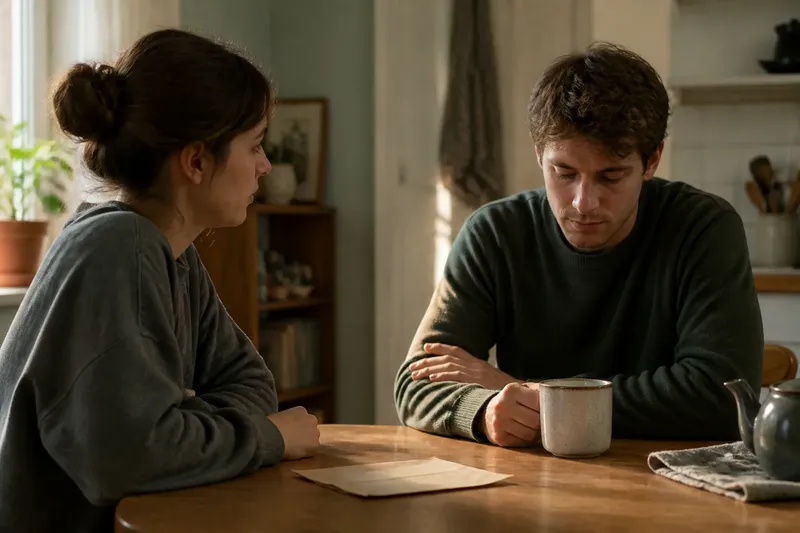
That context can carry dialogue of its own. A turned shoulder, a hand held still on a cup, or the distance between two people may shape how a line lands. The words tell you what is said; the wider frame can show how each person occupies the conversation.
Read the scene’s focus
If an exchange hinges on a subtle reaction, attend to the close-up. Watch the listener as well as the speaker: a scene may show one person delivering a line while the other person’s face reveals that it has struck a nerve. A tight frame can make a delay or flicker of expression feel central rather than incidental.
If the speakers’ physical relationship matters, favour the medium shot. It can show one person leaning in while the other stays back, or a hand reaching across a table and then withdrawing. Those movements are easier to read when the frame preserves enough of the body and shared space.
For quick dialogue, notice how the framing helps you follow the exchange. A medium shot holding both people can make interruptions, overlaps and shifts in attention clear. Close-ups can make each turn feel more isolated, so watch whether the scene draws you into individual reactions or divides the conversation into separate beats.
If a character is concealing something, neither shot size carries a fixed meaning. A close-up may invite you to scrutinise a composed face, but it cannot tell you by itself whether that composure means confidence, fear or performance. A medium shot might reveal a restless hand or a body angled towards the exit; these are clues, not a final verdict.
Say you are watching an invented scene in which one flatmate asks another about a missing letter. The first keeps their voice even; the second looks at a tea mug and does not touch it. In a medium two-shot, you can follow the question, the untouched mug and the space between them. If the film cuts to a close-up, watch whether the second person’s eyes or mouth changes when the letter is mentioned: the shift moves your attention from their arrangement to an individual reaction.
Compare both speakers
In a two-person conversation, a frame that includes both speakers offers something a single close-up cannot: a simultaneous view of the exchange. You can compare who faces whom, who takes up space, and who seems to wait for permission to speak. That does not make a two-shot more truthful; it lets you inspect both sides of the interaction at once.
Notice whether one speaker stays visible while the other talks. Keeping the listener in frame can make listening an active part of the scene: a tightened jaw or fixed gaze may answer the line without a spoken reply. If the film cuts to the speaker, that reaction is temporarily unavailable, and your attention shifts to the person delivering the words.
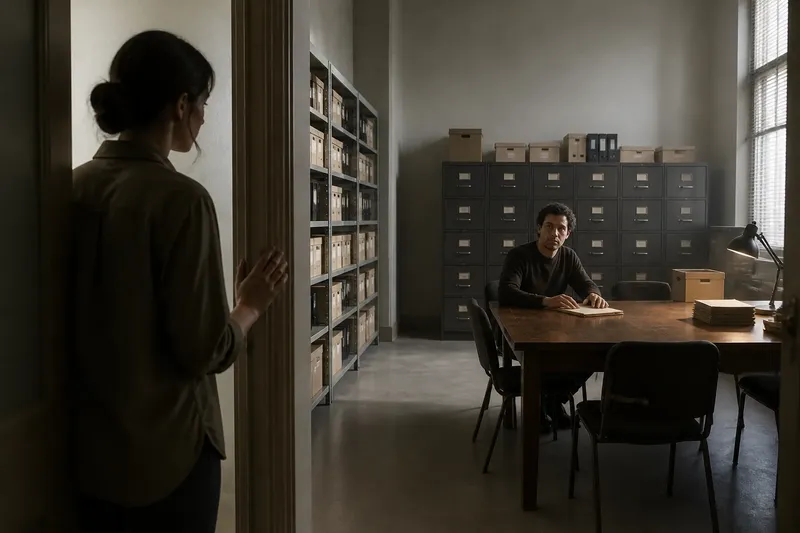
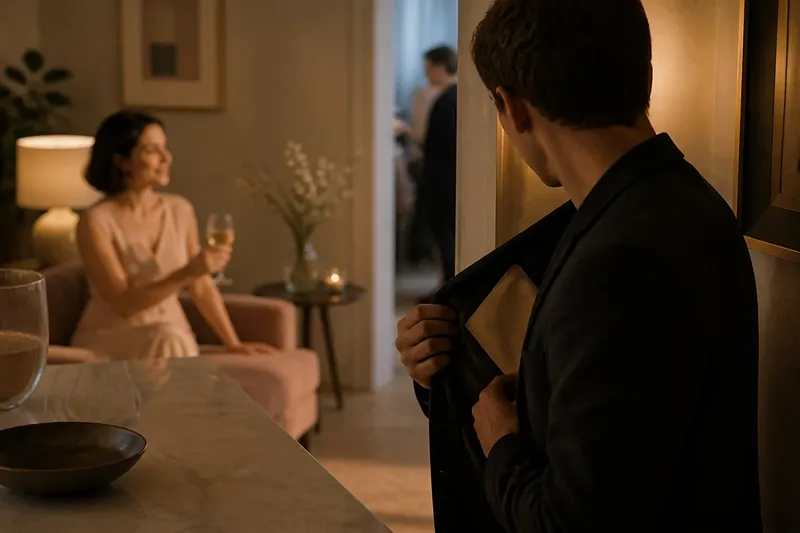
Composition matters within either shot size. One character may be nearer the camera, partly blocked, or pushed towards the edge of the frame. A medium shot can make those relationships visible, but a close-up can also place a face against a background that carries useful context. Look at the image itself rather than relying on the shot label.
Follow the camera’s attention
During a scene, ask three questions: Who is visible? What detail can I read? What has the frame made harder to see? They keep your attention on the image rather than on rules such as “close-ups mean emotion” or “medium shots mean realism”.
Then watch for changes in framing. A move from a medium shot to a close-up may narrow the scene to a response, while a return to a wider composition may restore the relationship between speakers. Its effect depends on what was visible before and what becomes visible afterwards.
Also notice when the frame does not change. A sustained medium shot may ask you to divide your attention between people, gestures and shared space. A held close-up may make a pause feel exposed, but the performance supplies the detail: watch where the actor directs their eyes, how long they wait, and whether their expression shifts as the other person speaks.
Questions about shot size?
Which shot size shows emotion best?
A close-up makes facial changes easier to see, so it often suits a scene built around a guarded look or wavering response. Emotion can also appear in a medium shot through posture, movement and the way one person faces another.
Does a medium shot always include both speakers?
No. A medium shot may frame one person or include only part of the other speaker. Check what is actually in the composition rather than assuming the shot label tells you who is visible.
Why cut from a two-shot to a close-up?
The cut can redirect attention from the shared exchange to one person’s face, making a reaction easier to read. It may also change the pace by separating a line from the response that follows.
Can a close-up hide important information?
Yes. A tight frame may exclude a hand gesture, another person’s response or a meaningful part of the setting. If a detail seems missing, notice what the crop withholds and whether the scene later gives you a wider view.
Choose what to watch
Choose a close-up when your main question is what a person’s face does while they speak or listen. Choose a medium shot when you want to follow gestures, movement or the balance between two bodies in the same space. If the scene moves between both, let each framing answer a different question rather than picking a favourite.
For a useful rewatch, follow the listener through one exchange, then watch the same passage for how the speakers use their hands and space. Close-up or medium shot matters because each frame offers different evidence; the details in the scene tell you where to look next.